
.jpg)
Get a Copy of My Book!
Jocie -- Southern Jewish American Princess, Civil Rights Activist
MEDIATION is a process that helps parties in dispute resolve their conflict. It is a form of assisted negotiation. With the help of a trained, impartial third party, called a mediator, people in dispute can negotiate a settlement of the conflict instead of litigating it.
Why would you want to do that ? It’s quicker, cheaper, and, most importantly, it allows the parties to be in control of the outcome, not some stranger.
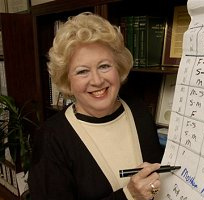
Hi. I’m Jocelyn Dan Wurzburg. In 1984, I began adding mediation services to my law practice as a saner way of dealing with conflicts. I am Memphis' first professional mediator.
Litigation is very expensive, often times costing tens of thousands of dollars. The process is lengthy, taking years to get a resolution to the problem. And then the outcome is in the hands of a judge or jury and is not predictable. If the conflict has an emotional component, and what conflict doesn’t, the parties can be in stress and limbo for a long time.
In mediation, unlike arbitration or court, the third party mediator doesn’t make any decisions — the parties themselves decide the outcome. They retain control of the solution. Most people say they are happier with decisions they make themselves because they might be able to come up with a solution that doesn’t make one party a total winner and the other a loser. Taking just hours, or a day or two, the process can commence as soon as they can get into the mediator’s office. Attorneys are part of the team and are welcomed in the sessions to give legal advise if the parties want them there. Mediators don’t advise either party. Final decisions are reached in consultation with the party’s lawyer.
Here is an interview of me on CNN marking the 2008 anniversary of
Dr. Martin Luther King's death.
Mediators charge an hourly rate and thus have no stake in the outcome. I charge $300 per hour. In divorce mediation, a refundable retainer is charged.
Mediators require that the parties make a consensual, informed decision. That requires getting all the information needed to reach a decision on the table, in legal terms that’s voluntary discovery of the pertinent facts a judge could make you produce and share with the other party.
You can go to mediation before you commence a lawsuit or temporarily opt out a law suit to try mediation. In Tennessee, you may find your judge ordering you to try it. The process is absolutely confidential and if it doesn’t work, the judge cannot know why or what had been negotiated. You have nothing to lose and a lot to save. You retain all of your legal rights.
What kinds of disputes are good for mediation? All family disputes, employment, business, contracts, will disputes, elder care and - of course- divorce just to name a few.
Some disputes are plainly and simply about money. How much? Those are called distributive disputes. Injury to person, property damage, medical treatment disputes are examples. An automobile accident resulting in an injury would be considered a distributive dispute because once the tort feasor (the person who caused the problem) pays dollars to the victim, they need never to see each other again.
Other disputes involve relational contacts and sometimes those contacts will continue after the dispute is resolved. These are called trans-actual disputes. An example is a divorce where there are children and grandchildren of the marriage. Divorce is especially well suited for mediation, since ugly litigation can impact so negatively on the children. Click FAMILY LAW.
So any time a continued relationship is desired or required after the resolution of the conflict, mediation, being a cooperative process, heightens the chance of a cooperative continuing relationship. You may be able to continue doing business with an unhappy customer. In construction work, you can get back on the job quicker to complete it. For more information regarding the types of cases well suited for mediation, click on SERVICES.
Certification of a mediator specialist is not currently available in Tennessee; however, I am approved by the Tennessee Supreme Court’s Alternate Dispute Commission under its Rule 31 and the Mediation Association of Tennessee to mediate all civil law cases and family law issues. I have served as an approved mediator for the E.E.O.C., the Dept. of Justice for ADA claims, the U.S. Postal Service, NASD, and divorce cases where abuse is alleged and am designated as an Advanced Practitioner by the Association of Conflict Resolution. Check out ABOUT JOCIE.
Thank you for your attention.
|
